He invites you to call out to Him in the day of trouble.
Yet To Be #192
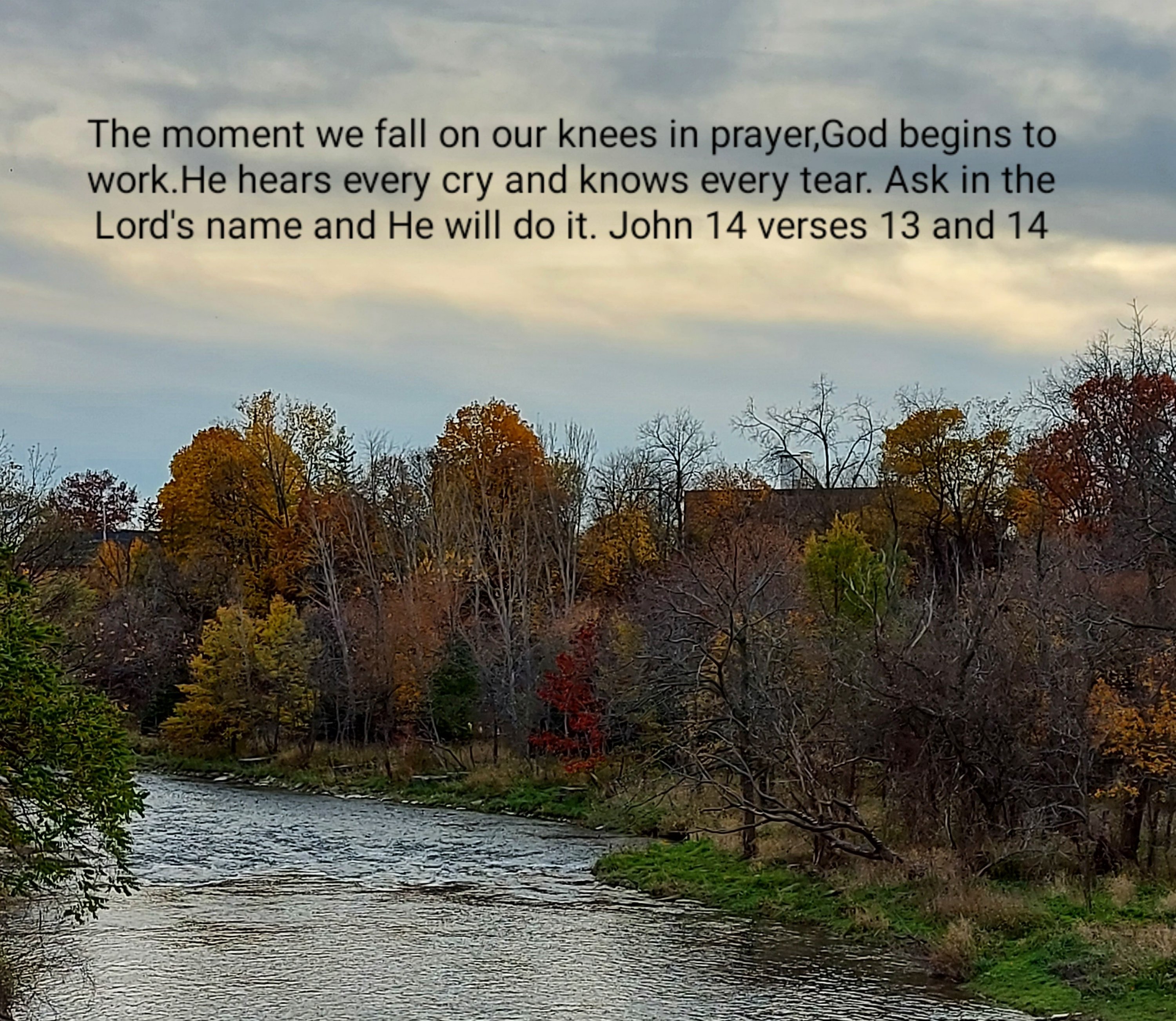
Oh, why do you fear? Why is your heart so cast down? Did He not say ask anything? He invites you to call out to Him in the day of trouble. He wants you to turn to Him with all your heart and humble yourself, so shall you find rest in the time of need. God said it. We ought to believe it and take Him at His word. He hears all your prayers and answers them all on time. Ask and see if He will not open the heavens and pour out a blessing just for you.
As night gives way to the dawn, so too our God turns sorrow into joy, ashes into beauty. He will never leave us to suffer in pain to suffer alone. He will not forsake us but will remain constant through tribulations. Ours is not a God made with hands or designed by human imagination. He is real. He is the true and living God who sits sovereign on his throne. Nothing escapes him. His children are not lost. He comforts us all and loves us equally. Great is his love and his faithfulness.
And the Lord shall guide you continually, and satisfy your soul in drought, and satisfy your bones: and you shall be like a watered garden, and like a spring of water, whose waters fail not. Isaiah 58:11
the Lord’s hand is not shortened, that it cannot save; neither his ear heavy that it cannot hear. Isaiah 59:1
To appoint unto them that mourn in Zion, to give unto them beauty for ashes, the oil of joy for mourning, the garment of praise for the spirit of heaviness that they might be called trees of righteousness, the planting of the Lord, that he might be glorified. Isaiah 61:3
It is a story of oppression leading to deliverance.
Yet To Be #188
The second book of the Torah or the Pentateuch is Exodus. Translated from the Greek language meaning going out or departure.
It is a story of oppression leading to deliverance. By the mighty hand of God, his people are set free to serve him in a land he promised back to Abraham (the patriarch). In the book of Exodus there are about seven themes:
first book of the Hebrew Bible called bereshit or in the beginning and the first book of the Christian Bible.
Genesis is the Greek word meaning origin or beginning.
First book of the Torah or the Law
Primeval history
Ancestral history
First Line sets the tone of the entire book, “In the beginning God created the heaven and the earth.” Genesis 1:1.
The Primeval history consists of relationships. The first relationship presented and most important, is the relationship between God and the Son as mapped out in the name of God or Elohim. The root El translated from Hebrew into English for God, the first name of God as seen in Genesis 1:1. Elohim is the plural for God. The Hebrews of the Old Testament had only one God who was Yahweh. They believed in monotheism which is the worship of one God. As Elohim is plural and Eloah is singular, this is the first evidence that the Son was with God the Father in eternity past before the creation. And God said, “let us make man in our image, after our likeness.” (Genesis 1:26) In the beginning, before time began, He was not alone but, is speaking with someone else. Then there is the relationship between God and man and the relationship between man and beasts and then man and woman as seen in the creation story. (Chapters 1- 11) The ancestral history details the rise of the nation of Israel as God’s chosen people and God’s covenant to Abraham (the patriarch) and his descendants. (Chapters 12-50)
Overview
Creation and the fall, (so-called original sin, casting out of the Garden, first promise of God, first murder and first murderer, the story of Cain and Abel) 1:1-5:32
Noah and his descendants, (the Ark, the Deluge, tower of Babel, dividing of language) 6:1-11:26
Abram (Abraham) and his descendants, (command to leave the Ur of the Chaldees, Covenant of God with Abram, Melchizedek the King of Salem and high priest of El Elyon is introduced, the destruction of Sodom and Gomorrah, Lot’s Wife, the birth of Moab and Ammon, Ishmael of Haggai, Abraham’s last test, the sacrifice of Isaac and Abraham’s belief in the promise of God and belief in resurrection is introduced) 11:27-25:18
Story of Isaac, Jacob, and Esau, (stolen birthright, Jacob, Leah, and Rachel, birth of Edom, the twelve sons of Jacob, brotherly jealousy, coat of many colors)25:19-36:43
Story of Joseph, (coat of many colors destroyed, Joseph sold into slavery, Joseph becomes governor, reunion of all the brothers and forgiveness, Jacob journeys to Egypt, the families all go down to Egypt and Joseph’s death) 37:1-50:26
The first five books of the Old Testament are called the Pentateuch.
Yet To Be # 186
The sixty-six books of the Bible are categorized into nine classifications:
The Pentateuch
History
Poetry
Prophets
Gospels
History
Pauline Epistles
General Epistles
Prophecy – Apocalypse
The first five books of the Old Testament are called the Pentateuch which title comes from the Greek Penta meaning, five and teuchos meaning scroll. Also known as the Law or the books of Moses, the lawgiver. In Jewish tradition, these five books make up what is called the Torah. The books begin with Genesis that chronicles the Creation, the covenant with Abraham and his descendants to Deuteronomy, ending with the death of Moses. Many scholars discuss the authorship of these books with the consensus that Moses composed them.
the Bible is divided into two sections called the old testament and the new testament.
Yet To Be # 185
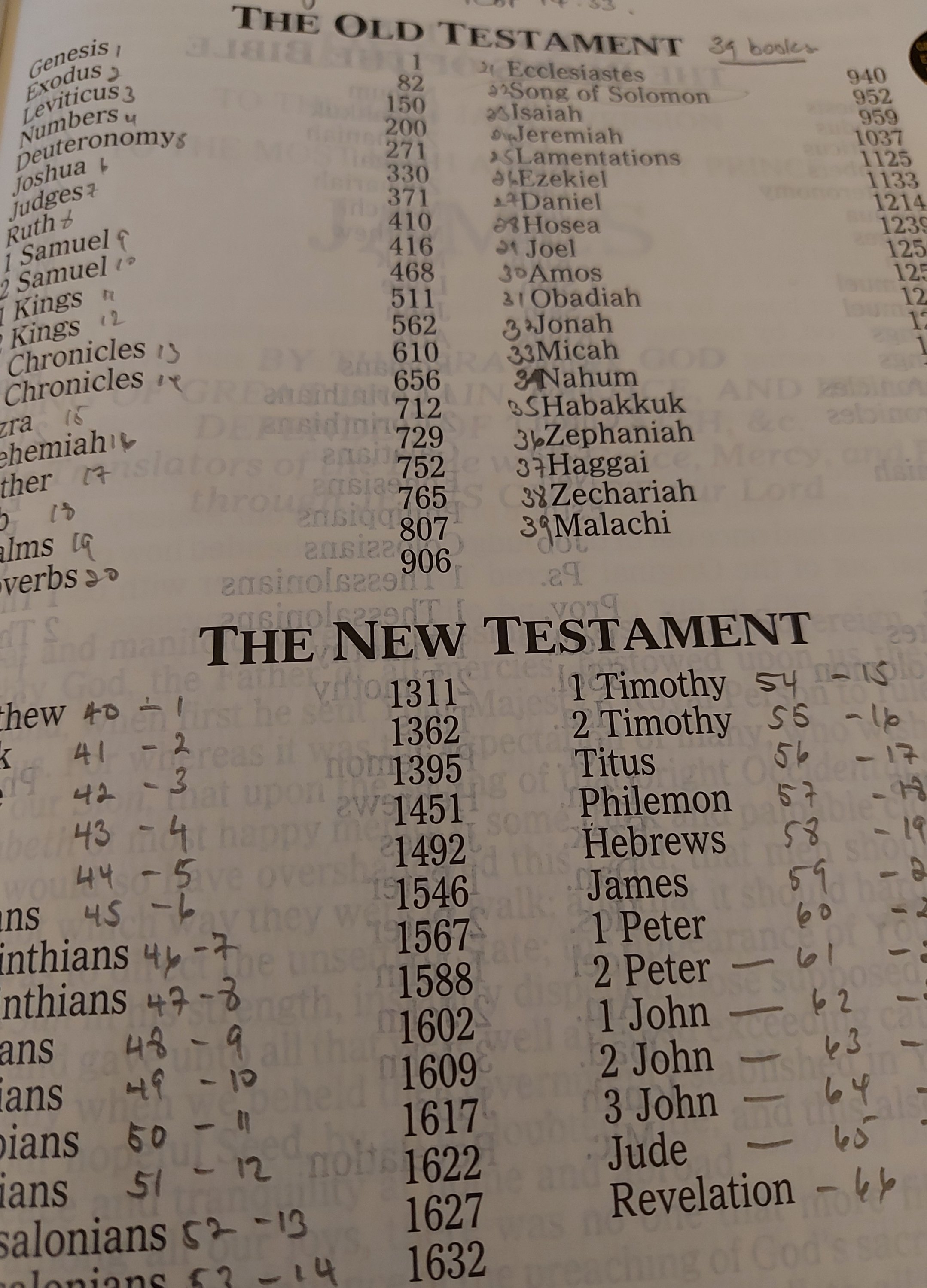
The Bible is divided into two sections called the Old Testament and the New Testament. There is a total of sixty- six books in the Christian Bible, the Old Testament consists of thirty-nine books whereas the New Testament consists of twenty-seven books.
Historical Fact:
The Old Testament was first coined by Melito of Sardis a Greek Bishop in the 2nd Century CE at Lydia which is today, Turkey.
A testament of the Bible is a historical record of God’s promise or covenant.
Quick Facts Old Testament (OT) VS Testament (NT):
OT is the history of a people
NT speaks of a person
OT is based on the law as given by Moses
NT is based on the grace of God as seen in Jesus Christ
OT is about his chosen people the Jews/Hebrews
NT is about the church
OT views the wrath of God against sin
NT shows the grace of God towards sinners
OT predicts the Messiah (Isaiah 53)
NT reveals the Messiah (John 4:25-26)
OT presents God’s Law
NT Jesus the Messiah fulfills that law
OT the blessings are physical
NT the blessings are spiritual
OT shows the beginning of days (Creation)
NT shows the end of days (God will put all things right)
OT forecasts the sufferings of Christ (Psalms)
NT the fulfillment of the sufferings of Christ (Gospels)
More about the Bible The Bible is the most influential book named in the world. Translated into every known existing language, it is still read daily by large numbers of people around the world. The Bible is more than a so-called religious book filled with instructions for life and commandments to follow, it has changed lives, laid out foundations of many governments to follow, it is the basis on which judicial and educational institutions around the globe dedicate their code of conduct. In general, it chronicles the ancient promises to the Jewish people and their activities, but further historically, it is sometimes used as an anthropological bridge to help verify lost gaps of time for the dating of ancient events and people when no other script is accurate enough. Whether you are a true Believer in God and his only son Jesus Christ or not, the Bible is the Word of God and is given “by inspiration of God, and is profitable for doctrine, for reproof, for correction, for instruction in righteousness.” The Bible is not just a book, but it tells God’s plans for mankind from the beginning of creation right to the future when the Son of God shall reign forever.









 jemfinds - Hello World 2.0