social distancing could also mean social isolation.
Social Distancing vs Social Isolation
This new year 2021 started where 2020 left off, hoping that this year is not the evil twin of last year. Governments all over the world are advising to wear masks, hand wash, stay at home and social distance. Retail and the hospitality industries are the hardest hit economically with shorter hours of operations or closures for an indefinite period of time. Vaccines are being created and administrated as a kind of hope against this relentless virus. In the meantime, world citizens have to keep calm and keep safe by obeying government regulations.
One such regulation is to social distance, but for a person who is hard of hearing, social distancing could also mean social isolation. According to a report from the American Speech and Language Hearing Association (ASHA), “hearing loss is the third most prevalent chronic health condition facing older adults”. Most people delay getting tested and therefore can fall prey to the side effects associated with untreated hearing loss, such as depression, anxiety, dementia, heart disease, mental fatigue and social isolation, to name a few.
The outlook for hard of hearing individuals seems bleak, but getting a hearing test is important. Hearing clinics are considered as essential services and are open with safety protocols for disinfecting and cleaning in place. For more convenience and accessibility, the hearing industry has also embraced tele support via virtual consultations.
Hearing clinics are still alive and well, ready to help those who need hearing services. For more information contact the local hearing clinic.
As the city relaxes it’s lockdown measures slowly, many businesses are preparing for their grand reopening. This is great news that will kick start the economy, but are we ready?
Are we mentally ready to go back to work and face clients on an everyday bases?
Are protocols set in place by management to keep employees safe?
These questions readily come to mind and it is understandable. As the Covid-19 lingers and we are bombarded by the numbers about infections and deaths caused by this virus, it is hard to steer clear of these worries. Sure, we know we cannot hide in our homes forever hoping to live on the money from employers or the government without so much as lifting a hand to do work. In order to earn a living, working is important. There is no such thing as free money. Some of us are blessed with still being employed and pulling in a pay cheque at regular amounts or reduced, in the eyes of the government we are still employed.. But there are others who are out of work and the hope of finding employment even after the city reopens and the economy starts moving, is slim to none.
There is the fear of not having anything in the future, then there is the fear of having, but worrying about survival. According to the article, Nervous American struggling with relaxed lockdown restrictions ( Denis Bedoya of Infosurhoy, May 5, 2020), personal risk assessment is paramount in our decisions to go out of our homes to attend appointments or work and can be evaluated as either high or low. In other words, is it important to go somewhere and has that place adapted enough protocols for safety.
Employment is very important. Jobs put food on our tables, pays our bills, helps us save for retirement and puts clothes on our backs and of course gives us a sense of wellbeing. Working at a hearing clinic is indeed rewarding for all those reasons mentioned and so many more, but with the province reopening, dealing with clients face to face in the midst of this pandemic, elevates stress levels for the hearing specialist, hearing care counsellor or any front office staff working with the public, due to face to face contact.
Keeping two meters apart and washing hands regularly are important actions that must be adhered to at all times. Working with the public will expose us to the virus and cannot be avoided.
It is common knowledge that businesses will have protocols in place and it will be the duty of the professional to follow these guidelines without taking shortcuts.
Guidelines such as
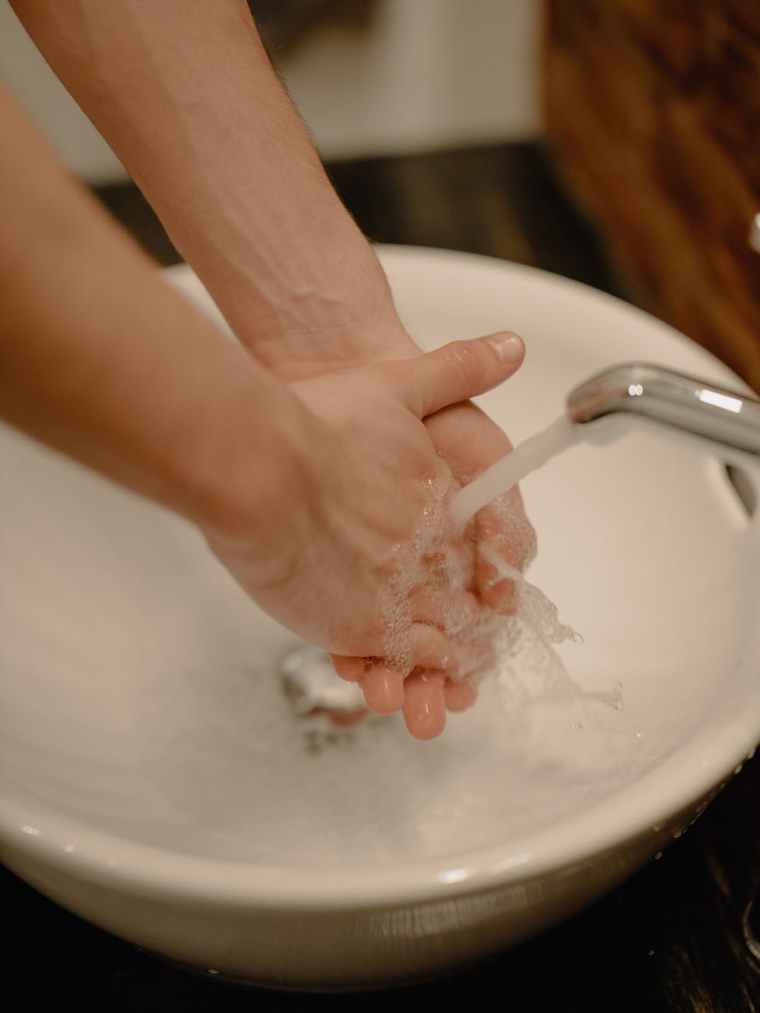
washing hands before every client
cleaning surfaces, equipment and instruments after every appointment
every professional have their own hand equipment such as otoscopes, otolights , pens and other items that should not be shared but kept cleaned and disinfected after every use.
Lab room should be used only as a lab and kept disinfected to avoid cross contamination
Food and beverage should be kept away from work surfaces and not be consumed or left out in the presence of clients.
Public washrooms must be cleaned after every use.
Masks, gloves, lab coats and face shields should be used when in close contact with clients for example: at fittings, testing, adjustments, impression taking, counselling or checking clients in at appointment times. ( these items may not be needed all the time but should be readily at hand)
Gloves should be worn when handling hearing aids and should be changed after every client.
These are only guidelines, but they are something to think about when back to work.
As said before, no one wants to be exposed to this virus, but dealing with the public face to face, there maybe no real way around that factor. It will sneak in some how, but it will be up to owners and management to create a safe and sustainable environment for the safety and health of frontline staff and for the public. Then, it will be the duty of frontline staff to adhere to these new measures for their own well being and for the safety of the public and their coworkers.
It is a group effort to make things work all in the name of health and safety.
Will the hard of hearing person be willing to acknowledge a hearing loss and invest in hearing aids? Or will they still be reluctant to move forward denying constantly any hearing problems? Things may not change on the first days back to work and with this virus still at our doorstep, we may be off to a rocky start. Clients may not want to come in immediately for fear of contracting the virus.
The Clinic Visit
With the new governmental safety measures of social distancing a hearing appointment will appear very different from one conducted at the beginning of the year.
The client is greeted by front desk staff behind plexiglass panel. Forms are completed by the staff and the usual sign in questions are asked in addition to new health questions about contact with someone with Covid – 19 and how they are feeling.
Some clinics may even take temperatures of anyone entering the clinic including staff
The client and any one accompanying them will need to wear a mask and use hand sanitizer upon arrival.
Visits are by appointment only and one appointment at a time will be present in the waiting room.
Hearing Specialist will also wear a mask and a possible face shield to reduce salvia splatter.
With all these new measures what happens to speech understanding if the client cannot see the Specialist’s mouth? The appointment can go south very quickly because of frustration experienced by the client since they cannot understand enough of the conversation to feel comfortable.
Put the client at ease. Before beginning the appointment the Specialist will wash their hands. This action at the onset is paramount and will help to put the client at ease. Also, inform them immediately about the use PPE(Personal Protective Equipment) as essential for their protection as well as the Specialist. The majority of clientele are elderly and vulnerable due to some other health concern, they need to know that they are in the right place and will be treated with care and kindness. Their health and their hearing health are both important.
During the appointment it is important to speak slowly and repeat instructions when needed. No need to rush. The client is present because they need help and the Specialist is the best professional to answer any questions about their hearing concerns.
If the client is very hard of hearing then ask for a family member or a guest to accompany them into the appointment. Due to social distancing only one other person can be allowed into the appointment and they too have to wear a mask. Again for the protection of all persons present.
If they still cannot understand what is being said then write the information in simple language. The Specialist may want to have simple procedures already written up for use on occasions like these. Ensure that the font is large enough to read and the coloured ink used is visibly acceptable for those clients who may have some kind of vision concern.
Use simple non- threatening hand movements – use simple hand signing if the client still cannot understand.
Keep eye contact and remember to speak slowly.
(Oticon, Canada , 2020) Hearing loss can affect your social life
Untreated hearing loss can cause you to withdraw from socializing because conversations take so much more mental energy. Left untreated, hearing loss can lead to feelings of isolation and depression.
See if some of these hearing loss related worries apply to you or if you suspect that they apply to a person close to you:
• I am often insecure when I am out as I don’t know where sounds are coming from
• I often feel depressed and alone
• I often get tired and need to rest after work
• I have problems remembering
• I have problems recognizing speech, especially in gatherings with other people
• My hearing loss has decreased my quality of life
• My hearing loss not only affects me, it also affects my family It is important to seek help if you experience signs of hearing loss in yourself or a loved on
(Starkey Canada, 2015) Not treating the hearing problem only leads to more frustration, loneliness, depression, anxiety, anger, emotional instability and paranoia. Those with untreated hearing loss experience a 30 – 40 % greater decline in thinking ability compared to those without hearing loss.
In this time of social distancing there will be challenges especially for those who have hearing problems. The immediate feeling of isolation is much higher than ever before coupled with staying 6 feet away in public plus wearing a mask adds to this growing frustration. Unfortunately, social distancing and other governmental guidelines are important to our health and we need to adhere to them. As Hearing Specialists we will work with these guidelines for the best possible outcome at hearing appointments.
Hearing loss affects people at any age. It is an invisible disability that gradually progresses over time and if not treated can lead to several different medical conditions such as anxiety, depression, social isolation and relationship breakdowns ( Hearing loss)
The National Campaign for Better Hearing helps to spread the awareness of hearing loss prevention for those 60 years of age and older They invite Canadians to get a simple baseline test with the hope of reassessment in future years. In Canada, over 3 million people suffer from hearing loss which is approximately 1 in every 10 Canadians. (www.helpmehear.ca)
But what about the younger population, those under the age of 55?
Should younger folk be tested too?
According to the World Health Organization (WHO) “less than 1 billion young people ages 12 to 35 are at risk of hearing loss due to recreational exposure to loud sounds.” They agree that prevention starts by getting tested for hearing loss by a registered Audiologist or a certified Hearing Instrument Specialist. And of course, turning down the noise.
Now, what about those 36 to 59 years of age, should they be tested too?
The answer is yes. Millions of people globally are living with hearing loss and some don’t know it. Sometimes the signs of hearing loss are so subtle they can easily be ignored. Some signs may include:
• Asking people to repeat
• Difficulty hearing in background noise
• Ringing in the ear
• Turning up the TV or radio very loud where others complain
To list a few.
But what if there are no real signs of hearing loss?
What can be done?
Simply get a baseline test which is complimentary as part of a holistic health regime and if there is no hearing loss you can be screened annually or biannually as part of preventative measures.
Remember hearing loss affects people of all ages, cultures and status.
Get tested today
When you have constant tinnitus there is no silence.
Noise is always there. When I wrote this post, I was sitting on commuter train in their Quiet Zone area which of course was not so quiet because the fan in the cabin was very loud. But helpful. It was constant and it helped me to focus on something other than the ringing in my ears. This brings me to the last suggestion in coping with tinnitus – Focus on Something Else
Some people are so disturbed by their tinnitus that they ask for some kind of solution in desperation; from operations, medications or therapy. What works for some may not work for others. People do different things to help with mild to moderate cases of tinnitus. The list below is a simple suggestion and can be used as a starting point.
My advise is to always see a professional first: your Doctor, Audiologist or Hearing Instrument Specialist. These people are trained to help and know the best avenue for you to take.
Everyday Coping Methods for Those with Tinnitus
Diet – Some swear by having a well-balanced diet. And to watch the sodium intake and the amount of caffeine you consume daily.
Relaxation – a good vacation or a staycation, just time off from that busy schedule to de-stress and relax. Find a quiet place to close your eyes and put your head back if only for 15 minutes daily to start. Have a good night sleep. Check out this cool post: Power Napping vs Sleeping
Exercise – is good but in moderation. If you are starting a new exercise program please check with your doctor especially if you haven’t been active for a while. Take up walking. It is great exercise and it doesn’t cost much. All you need are good pair of walking shoes and comfortable clothing. No time? Take a walk at lunch or on your break. It doesn’t have to be a long walk just enough to get you moving. Or learn a new game or sport to keep active.
Learn something new or do something old you enjoy – revisit that stamp collection or take an art class or learn to play an instrument the list goes on. My example:
Last year my sister and I took up Line dancing. Who would think! But we loved it. We had a workout, met new people and learned something new. Got the brain working differently. It was a great exercise for the body and healthy for the brain.
The Take Away
When you are occupied with something else other than the noises in your ears you can slowly begin not noticing the ringing as much.
Remember – before starting any form of exercise speak to your doctor first.
Understanding Hearing Loss and the Importance of Hearing Aids
The human ear is an important organ in the body responsible for hearing and balance. When hearing is partially or totally impaired our ability to communicate with others can become difficult and frustrating leading to relationship breakdowns, isolation and depression. There is no respecter of age, ethnicity, culture, class, race or sex when it comes to hearing loss. Hearing loss affects not only the person diagnosed but it also loved ones, family members, friends, co- workers and caregivers. Therefore learning about hearing, hearing loss and different solutions that bridge the communication gap whether it is a hearing aid, assistive listening device, lip- reading, sign language, written messages, text messaging, video conferencing et cetera help us to understand and communicate better with the hearing impaired person.
“Next to the eye the ear is the most important of human sense organs. It allows us to communicate and to exchange ideas“
This section is a basic look at understanding hearing by reviewing:
What is hearing?
What is a hearing loss?
Anatomy of the Ear
Importance of a hearing test
What are hearing aids good for and how they work.
Communication Cues
What is hearing?
Hearing is the ability to perceive sound when it is conducted through the ear. When someone has a hearing loss that ability to hear sound is reduced because there is impairment in one or more parts of the ear. A person with hearing loss is called Hard of Hearing. Hard of Hearing does not mean the person is Deaf Identified but they have some reduction in hearing that can range from mild to profound. Whereas someone who is Deaf Identified abilities to communicate is visually based and sometimes also can be sound based supported. In other words, a person who identifies themselves as deaf can lip-read, use sign language, look at body language, facial language or written language to communicate and can use a hearing device. (Canadian Hard of Hearing Association)
Tinnitus is an unwelcomed experience. For all of us who suffer from tinnitus it could come and go as it pleases or it could decide to stay. We have no control over this ringing in- the- ear- menace but, we try to live with it daily, sometimes with success and others times without.
One thing you must realise is that you are not alone. Tinnitus does not only affect the sufferer but others like family members, friends and colleagues, basically anyone close. These people could become your greatest support group.
What is the best way to get this support?
Take a guest with you to your appointment for the hearing test and tinnitus assessment. It will deepen their understanding about what you are experiencing which could then lead to a good sense of sympathy.
It is this sympathy that is needed. Sympathy leads to kindness. And kindness leads to support.
You need support because tinnitus could at times be overwhelming. People closest to you can give you the support you need. The more they understand the better the support.
Don’t keep your tinnitus suffering to yourself. Tell someone who would listen.
Now that you’ve seen the Audiologist or the Hearing Instrument Specialist and they’ve given you a hearing test what is there left to do?
Talk…..
The hearing professional will discuss the results of the hearing test. You may or may not have hearing loss but you may still suffer from tinnitus.
How is that possible?
Don’t people with hearing loss all have tinnitus?
It is true about 90% of people with tinnitus also have hearing loss and tinnitus affects 1 in 5 people. What about the rest of us?
Let’s work backwards with some basic information about tinnitus.
Tinnitus or some pronounce it tin-eye-tus or tin-a-tus is not a disease but a symptom resulting from a number of causes most common is hearing loss but others are: ear infections, hearing loss, constant exposure to loud noises, brain tumor, emotional stress, exposure to certain medication , head or neck injury, hypertension, heart disease and earwax to name a few.
There are different types of tinnitus: subjective, objective and pulsatile. Subjective is the most frequent type and it is explained as hearing sound when there is no external sound and it can present itself as ringing, clicking, hissing or buzzing; some people even experience hearing music.
Tinnitus also triggers an emotional response in each individual in unique portions. In other words, tinnitus affects everyone differently and their reactions are all different. Some people can ignore the noise in their ears, whereas others are frustrated and even can be emotionally distraught. No two people are the same.
So where do you go from here?
Counselling is needed and your hearing professional is going to be able to help you with that.
I hear the ringing, the buzzing, the clicking that noise sometimes throughout the day but it happens mostly at night before bed when everything is quiet. This is called Tinnitus and many people young and old suffer from this condition.
I work as at a hearing clinic as a Hearing Specialist and I’ve noticed since the flu season began several people have visited the clinic with symptoms of tinnitus. Most are getting over the flu virus and report that the tinnitus was strongest when they were laid up with the flu and now they’re “better” the tinnitus is still present.
I know my tinnitus began with a virus and never went away even after I got better and that was over 10 years ago. The ringing in my ears gets more prevalent when I am stressed or I’m lacking sleep and then calms down when I sleep better and take my vitamins. That works for me so far, but it may not work for others.
At the clinic before I suggest any kind of solution to help the client with tinnitus, I take a case history and I do a full hearing assessment. You see tinnitus and hearing loss go hand and hand but there is also a percentage of people suffering from tinnitus who have no hearing loss.
Step #1 get your hearing tested by a registered Audiologist or a Hearing Instrument Practitioner. These people can help you and guide in the right direction.
Ever heard some buzzing, hissing, ringing or even a chirping sounds in the ear? If your answer is yes, then you may have experienced something called Tinnitus.
Tinnitus pronounced tin-a-tus or tin-eye-tus is a medical term derived from the Latin word “tiniere” which means to ring. It refers to any sort of sound heard by the individual, but with no external source.
No, you aren’t going crazy but tinnitus can be heard constantly and can cause a great deal of stress, frustration and mental anguish. Some neuroscientists describe it as “phantom auditory perception” whereas the ordinary folks call it noise. Noise that can be managed.
Tinnitus is not uncommon. Today in the hearing industry as the number 1 disability for military veterans and it affects 1 in 5 persons. With or without hearing loss, no matter the age at some point in everyone’s lifetime tinnitus may occur.
There are tons of information on the internet about tinnitus but I will break it down with ease and compassion because I too suffer from tinnitus.








 jemfinds - Hello World 2.0