Accessibility in Lockdown: Hearing Clinic

Accessibility is important for the survival of any hearing clinic in this time of city wide lockdowns and the new normal. The ability for the public to have access to the hearing clinic and the services provided by that clinic is important.

Accessibility is important for the survival of any hearing clinic in this time of city wide lockdowns and the new normal.  The ability for the public to have access to the hearing clinic and the services provided by that clinic is important. Clinics are continuously opening their doors wider hoping to welcome back old and faithful clients and to attract new clientele.  Time lost in the lockdown can never be recovered, therefore kick starting sales and projections will be challenging especially when some parts of the city are still closed and some clients are still evaluating the risk factor entailed with any hearing visit. However, clinic doors cannot remain partially closed indefinitely when people need help with their hearing concerns.  It is good business practise to have in place a comprehensive operational and marketing plan before and well into the lockdown, to anchor the hearing clinic in the first few month at the reopening and beyond. Hearing businesses rely on customer service and reliability.

Photo by Tim Mossholder on Pexels.com

How can a clinic still deliver exceptional service to the public within this time of the new governmental regulations of social distancing, mask wearing, appointment only solutions, plexiglass reception desks and constant handwashing? Not that we do not regularly wash our hands.

Is the drop in or walk in service gone for good?

Are the days of social greeting and cordial welcome turned to something cold and clinical?

Can clients still pop in for a quick visit and chat about daily matters while getting hearing aids cleaned or adjusted?   

Can we still show care wearing face shields and masks? 

These are all good questions lurking in the far recesses of clinical staff and the public.  The service model will change in the new normal and as clinicians, we will learn to adapt in order to still give exceptional service.  Learning to adapt and to move along with the changing and ever evolving hearing industry can be a challenge to clinicians, but it is nothing out of the ordinary.  Hearing aids are rapidly developing and improving, becoming more technological advanced to meet the needs of the hearing aid user and to make their wearing more successful.  Training is continuous and copious allowing the clinician to remain fresh, knowledgeable and proficient. 

In this new normal, hearing clinic in house service will alter for safety reasons but new services will emerge and grow over time.  One such service is the moving forward of the telehealth, e-health or remote care hearing service model.  The electronic use of delivering health service. (www.who.int)

This is a concept in the hearing industry that is available but not readily used. Due to the Covid -19 pandemic it has become a shining star bumped to the top of the list of services.  Like everything else there is the good, the bad and the ugly.  Telehealth in the hearing industry is a little of everything. 
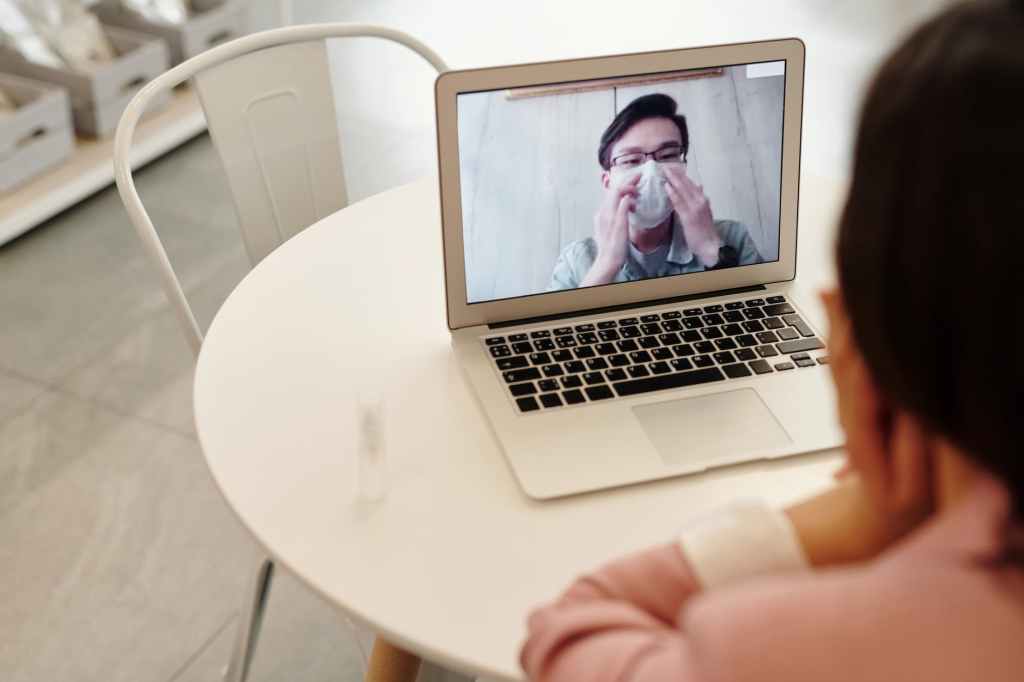
Photo by Edward Jenner on Pexels.com

The ability to adjust hearing aids remotely is a plus for the hearing aid user and clinician.  The follow up appointment can be conducted via the internet using a similar feature such as face time or skype.  The client books and appointment with the clinician, they connect via the internet with audio and visual.  The clinician can do adjustments to the user’s hearing aids in real time.  The client does not have to be in the office but can be at home, at work, a restaurant, basically anywhere they can connect with the use of an app on their phone.  Amazing and satisfying for both client and clinician. 

But what if? 

  • The client has no clue how to connect to the internet or use the phone app
  • There is poor internet service on both the clinician or the client’s side.  Simple troubleshooting regarding Wi-Fi connection or internet service provider information and connection is important before booking appointments.
  • Client does not have the up to date android version or IOS on their phone in order to download the app
  • Client has older hearing aid technology not compatible with this new software feature.  Not all clients will have hearing aids suitable for remote programming.  This maybe an opportunity to discuss the benefits of newer technology.
  • Clinician does not have the correct training – continuing education is needed and should be completed before venturing into virtual programming.

These are a few road blocks to bear in mind.  They are not barriers.  The success of telehealth is not impossible to achieve, training may be needed on both the client’s side and the clinician’s side. Also, certain clients are better candidates for this service than others because of technological deficiencies which maybe at first difficult to overcome.  Therefore, explanations and making appointments less complicated but simple is the best approach. Complicated concerns need in house appointments and follow up care at the clinic is good practise.   Clinicians need to remember that telehealth is only just a part of the full service regime provided by the clinic and not the only service available. 

Along with the regular in house service such as hearing tests, face to face adjustments and follow up care additional service models are available to the client when needed.

Other Services:

  • Curbside service within hours of operation – available for picking up supplies and emergency repairs or cleaning.
  • Chat line – live persons should be available to talk with the public.
  • Online how- to- videos and help videos will support the hearing aid end user
  • Call centre or support call service – up to date with available access times and staffed with knowledgeable individuals preferably an Audiologist or a Hearing Instrument Practitioner
  •  Online presence/ website – up to date website with tips for clients to follow and contact information.

“Embracing Remote Programming” by Shari Eberts from her website http://www.livingwithhearingloss.com  is a great resource written from the point of view of a person living with hearing loss.

Telehealth is here to stay. The current situation of COVID-19 has solidified the need to implement alternative methods of providing hearing healthcare to current and future patients. ( Remote Hearing Care a Primer by Dr.Younker, wwwhearinhealthmatters.org)

Delivering exceptional and professional service to those with hearing loss is the framework of a healthy hearing clinic.  As a clinician, our duty to the clinic and the public is to remain proficient in our education and practical in its application.  The service we provide is diverse, ongoing and it is essential for those in need, thereby making reliability and availability the hallmark of a good full service hearing clinic.

Ready or Not: Back to Work at the Hearing Clinic

Are we mentally ready to go back to work…

As the city relaxes it’s lockdown measures slowly, many businesses are preparing for their grand reopening.  This is great news that will kick start the economy, but are we ready?   

Are we mentally ready to go back to work and face clients on an everyday bases?

Are protocols set in place by management to keep employees safe?

Photo by Ivan Bertolazzi on Pexels.com

These questions readily come to mind and it is understandable. As the Covid-19 lingers and we are bombarded by the numbers about infections and deaths caused by this virus, it is hard to steer clear of these worries.  Sure, we know we cannot hide in our homes forever hoping to live on the money from employers or the government without so much as lifting a hand to do work.  In order to earn a living, working is important.  There is no such thing as free money. Some of us are blessed with still being employed and pulling in a pay cheque at regular amounts or reduced, in the eyes of the government we are still employed.. But there are others who are out of work and the hope of finding employment even after the city reopens and the economy starts moving, is slim to none. 

There is the fear of not having anything in the future, then there is the fear of having, but  worrying about survival.  According to the article, Nervous American struggling with relaxed lockdown restrictions ( Denis Bedoya of Infosurhoy, May 5, 2020), personal risk assessment is paramount in our decisions to go out of our homes to attend appointments or work and can be evaluated as either high or low.  In other words, is it important to go somewhere and has that place adapted enough protocols for safety.

Employment is very important.  Jobs put food on our tables, pays our bills, helps us save for retirement and puts clothes on our backs and of course gives us a sense of wellbeing. Working at a hearing clinic is indeed rewarding for all those reasons mentioned and so many more, but with the province reopening, dealing with clients face to face in the midst of this pandemic, elevates stress levels for the hearing specialist, hearing care counsellor or any front office staff working with the public, due to face to face contact.   

Keeping two meters apart and washing hands regularly are important actions that must be adhered to at all times.  Working with the public will expose us to the virus and cannot be avoided. 

Therefore working safe is important. 

Photo by ready made on Pexels.com

It is common knowledge that businesses will have protocols in place and it will be the duty of the professional to follow these guidelines without taking shortcuts. 

Guidelines such as

  • washing hands before every client
  • cleaning surfaces, equipment and instruments after every appointment
  • every professional have their own hand equipment such as otoscopes, otolights , pens and other items that should not be shared but kept cleaned and disinfected after every use.
  • Lab room should be used only as a lab and kept disinfected to avoid cross contamination
  • Food and beverage should be kept away from work surfaces and not be consumed or left out in the presence of clients.
  • Public washrooms must be cleaned after every use.
  • Masks, gloves, lab coats and face shields should be used when in close contact with clients for example: at fittings, testing, adjustments, impression taking, counselling or checking clients in at appointment times. ( these items may not be needed all the time but should be readily at hand)
  • Gloves should be worn when handling hearing aids and should be changed after every client.

These are only guidelines, but they are something to think about when back to work.

As said before, no one wants to be exposed to this virus, but dealing with the public face to face, there maybe no real way around that factor.  It will sneak in some how, but it will be up to owners and management to create a safe and sustainable environment for the safety and health of frontline staff and for the public.  Then, it will be the duty of frontline staff to adhere to these new measures for their own well being and for the safety of the public and their coworkers. 

It is a group effort to make things work all in the name of health and safety.    

Photo by fauxels on Pexels.com

11 Things about Hearing Tests and the New Normal

Hearing loss and social distancing: the visit to a hearing clinic

What will it be like when all the hearing clinics are opened again?

Photo by LinkedIn Sales Navigator on Pexels.com

Will the hard of hearing person be willing to acknowledge a hearing loss and invest in hearing aids?  Or will they still be reluctant to move forward denying constantly any hearing problems?  Things may not change on the first days back to work and with this virus still at our doorstep, we may be off to a rocky start.  Clients may not want to come in immediately for fear of contracting the virus. 

The Clinic Visit

With the new governmental safety measures of social distancing a hearing appointment will appear very different from one conducted at the beginning of the year.

5 Things about the New Normal Appointment

Photo by cottonbro on Pexels.com
  1. The client is greeted by front desk staff behind plexiglass panel. Forms are completed by the staff and the usual sign in questions are asked in addition to new health questions about contact with someone with Covid – 19 and how they are feeling. 
  2. Some clinics may even take temperatures of anyone entering the clinic including staff
  3. The client and any one accompanying them will need to wear a mask and use hand sanitizer upon arrival.
  4. Visits are by appointment only and one appointment at a time will be present in the waiting room.
  5. Hearing Specialist will also wear a mask and a possible face shield to reduce salvia splatter.

With all these new measures what happens to speech understanding if the client cannot see the Specialist’s mouth? The appointment can go south very quickly because of frustration experienced by the client since they cannot understand enough of the conversation to feel comfortable. 

6 Things the Specialist will need to do.

Photo by cottonbro on Pexels.com
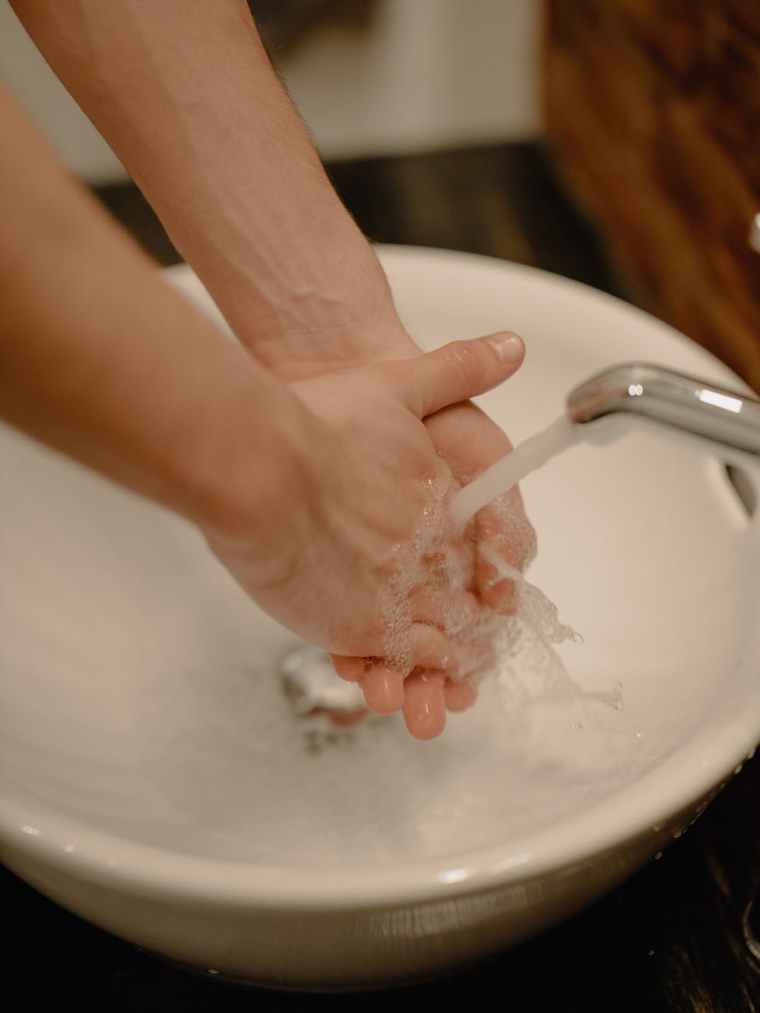
  1. Put the client at ease. Before beginning the appointment the Specialist will wash their hands. This action at the onset is paramount and will help to put the client at ease. Also, inform them immediately about the use PPE(Personal Protective Equipment) as essential for their protection as well as the Specialist. The majority of clientele are elderly and vulnerable due to some other health concern, they need to know that they are in the right place and will be treated with care and kindness. Their health and their hearing health are both important.   
  2. During the appointment it is important to speak slowly and repeat instructions when needed. No need to rush.  The client is present because they need help and the Specialist is the best professional to answer any questions about their hearing concerns.
  3. If the client is very hard of hearing then ask for a family member or a guest to accompany them into the appointment.  Due to social distancing only one other person can be allowed into the appointment and they too have to wear a mask.  Again for the protection of all persons present. 
  4. If they still cannot understand what is being said then write the information in simple language. The Specialist may want to have simple procedures already written up for use on occasions like these.  Ensure that the font is large enough to read and the coloured ink used is visibly acceptable for those clients who may have some kind of vision concern. 
  5. Use simple non- threatening hand movements – use simple hand signing if the client still cannot understand. 
  6. Keep eye contact and remember to speak slowly.

(Oticon, Canada , 2020) Hearing loss can affect your social life

Untreated hearing loss can cause you to withdraw from socializing because conversations take so much more mental energy. Left untreated, hearing loss can lead to feelings of isolation and depression.

See if some of these hearing loss related worries apply to you or if you suspect that they apply to a person close to you:

• I am often insecure when I am out as I don’t know where sounds are coming from 

• I often feel depressed and alone 

• I often get tired and need to rest after work 

• I have problems remembering

• I have problems recognizing speech, especially in gatherings with other people 

• My hearing loss has decreased my quality of life 

• My hearing loss not only affects me, it also affects my family
It is important to seek help if you experience signs of hearing loss in yourself or a loved on

(Starkey Canada, 2015)  Not treating the hearing problem only leads to more frustration, loneliness, depression, anxiety, anger, emotional instability and paranoia.  Those with untreated hearing loss experience a 30 – 40 % greater decline in thinking ability compared to those without hearing loss. 

In this time of social distancing there will be challenges especially for those who have hearing problems.  The immediate feeling of isolation is much higher than ever before coupled with staying 6 feet away in public plus wearing a mask adds to this growing frustration. Unfortunately, social distancing and other governmental guidelines are important to our health and we need to adhere to them. As Hearing Specialists we will work with these guidelines for the best possible outcome at hearing appointments.