More About the Bible: Part 2 the Two Testaments

the Bible is divided into two sections called the old testament and the new testament.

Yet To Be # 185

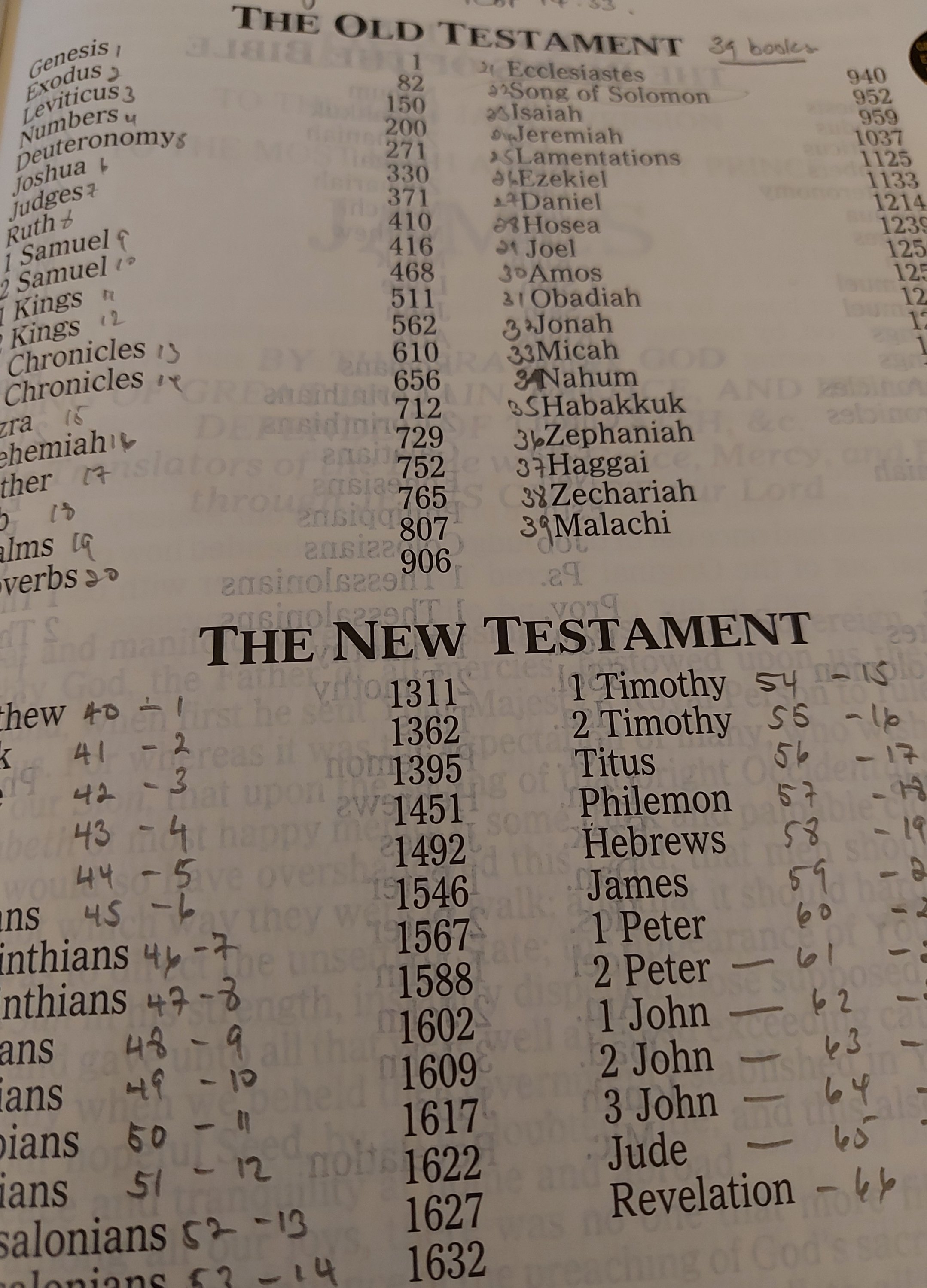
The Bible is divided into two sections called the Old Testament and the New Testament. There is a total of sixty- six books in the Christian Bible, the Old Testament consists of thirty-nine books whereas the New Testament consists of twenty-seven books. 

Historical Fact:

The Old Testament was first coined by Melito of Sardis a Greek Bishop in the 2nd Century CE at Lydia which is today, Turkey.

A testament of the Bible is a historical record of God’s promise or covenant.

Quick Facts Old Testament (OT) VS Testament (NT)

  • OT is the history of a people 
  • NT speaks of a person
  • OT is based on the law as given by Moses
  • NT is based on the grace of God as seen in Jesus Christ 
  • OT is about his chosen people the Jews/Hebrews
  • NT is about the church
  • OT views the wrath of God against sin 
  • NT shows the grace of God towards sinners 
  • OT predicts the Messiah (Isaiah 53) 
  • NT reveals the Messiah (John 4:25-26)
  • OT presents God’s Law
  • NT Jesus the Messiah fulfills that law 
  • OT the blessings are physical 
  • NT the blessings are spiritual
  • OT shows the beginning of days (Creation)
  • NT shows the end of days (God will put all things right) 
  • OT forecasts the sufferings of Christ (Psalms) 
  • NT the fulfillment of the sufferings of Christ (Gospels) 
  • OT old creation (Genesis) 
  • NT new creation
  • OT first Adam (Genesis) 
  • NT last Adam (Gospels) 

Yet To Be #115

In the beginning was the Word and the Word was with God and the Word was God.

What’s in a title continued…

El is translated from Hebrew into English meaning God which is the first name of God as seen in Genesis 1 verse 1.

Elohim is plural for God and Eloah is the singular in Hebrew for God. Even though Elohim is a plural noun it does not mean the Hebrews worshipped many gods. The Hebrews of the Old Testament had only one God who was Yahweh. They believed in monotheism which is the worship of one God. It is also the first commandment given to them by Yahweh.


“Thou shalt have no other gods before me…for I am a jealous God.” Exodus 20 verses 3 and 5.


Why would Elohim be plural? Maybe it is the evidence that the Son was with God the Father in eternity past before the worlds were made.
“Let us make man in our image” Genesis 1 verse 26.Who is He speaking with? In the Gospel of John chapter 1 verse 1, “In the beginning was the Word and the Word was with God and the Word was God.”


Historical Fact: After the Babylonian exile in the 6th century BCE (before the current era) even from the 3rd century BCE onward Hebrews slowly ceased to use the name, Yahweh. The name was too scared and in the synagogue, the Hebrew word Adonai meaning “my Lord” was used vocally. Adonai was translated as Kyros “Lord” in Greek.

Yet To Be #113

The names of the true and living God

The God of the Old Testament Bible is strong and powerful.  

The Creator. 

The One true and living God. 

His character is all holy and perfect. 

Omnipotence: God is all-powerful. 

“Thine, O Lord is the greatness, and the power, and the glory, and the victory and the majesty.” 1 Chronicle 29 verse 11. “The Lord the Creator of the ends of the earth faints not.” Isaiah 40 verse 28. “Who laid the foundations of the earth that it should not be removed forever.” Psalm 104 verse 5. 

Omniscience: God is all-knowing. 

“Can anyone teach God knowledge?” Job 21 verse 22. “Oh the depth of the riches both of the wisdom and knowledge of God.” Romans 11 verse 33. 

Omnipresence: God is everywhere at all times. 

“But will God indeed dwell on the earth? Behold the heaven and heaven of heavens cannot contain thee; how much less this house that I have built?” 1 Kings 8 verse 27.

“Am I a God at hand saith the Lord, and not a God afar off? Can any hide in secret places that I shall not see him? saith the Lord. Do not I fill heaven and earth?” Jeremiah 23 verse 23 and 24. 

Jehovah is the Latinized form of the Hebrew name transliterated four letters YHWH. The proper name of the God of Israel in the Hebrew Bible. In English is pronounced Yahweh. 

Some of His names:

  1. El
  2. Elohim
  3. Elohei
  4. El Shaddai
  5. Jah
  6. Adonai
  7. Jehovah Nissi (Adonai-Nissi) – the Lord our banner. Exodus 17:8-15
  8. Jehovah -Roi – The Lord My Shepherd Psalms 23:1
  9. Jehovah Jehovah-Rapa – the Lord that health Exodus 15:26
  10. Shalom – the Lord our peace. Judges 6:24
  11. Jehovah – Jireh – The Lord will provide. Genesis 22:13-13
  12. Jehovah – Tsidkenu – the Lord our righteousness. Jeremiah 23:6

Yet To Be #106

Captain of our Salvation

Day 17 What’s in a name Part 8

What’s in a name versus what’s in a title.  

“A name is a word or phrase that constitutes the distinctive designation of a person or a thing.”

“A title is a name that describes someone’s position or job.”

1 Samuel 22 verse 1 

“And everyone who was in distress, and everyone who was in debt, and everyone bitter in soul, gathered to him.”

David escaped to the cave of Adullam away from his enemy King Saul to safety, and his brethren followed him. Those who wanted to follow him turned their backs on everything and looked to David making him their captain.

David in this passage of the old testament is a type of the Lord Jesus Christ. As David’s brethren followed him so too we should follow the Lord and keep our eyes fixed on Him giving him the first place in our life. He is in control and He is worthy of all our praise and worship. And he is the Captain of our salvation. ( Darlington Feddoes, 2007) 

“For is became him, for who are all things, and by whom are all things, and by whom are all things in bringing many sons unto glory to make the captain of their salvation.” Hebrews 2 verse 10.

Yet To Be #103

Day 14 What is in a name Part 5

His name shall be called Jesus or Yeshua in Hebrew. (Matthew 1 verse 21) The gospel of Matthew presents Jesus as the Messiah, the anointed one. At the beginning of the book, his earthly lineage is discussed making it evident that he is the offspring of King David. (Matthew 1 verse 1 then verse 16)


His Davidic lineage is very important for establishing him as the long-awaited Messiah who is to save his people. God made a covenant with David that his kingdom will have no end (2 Samuel 7 verse 13 and 14)
I will establish the throne of his kingdom forever. I will be his father and he shall be my son.”


Though God is speaking to David about his son Solomon who will build God’s house, this promise also eludes to the future King, God’s only begotten son, Jesus. Another passage where it is written that of his kingdom there will be no end is in the book of Isaiah chapter 9 verse 7.


The new testament is a fulfillment of the old testament and in the Lord Jesus Christ is the manifestation of all God’s promises.

Yet To Be #100

What’s in a name.

Day 11 What’s In A Name Part 2

What’s in a name?  

There is much in his name. In his name there is power, there is life, there is love, there is fullness of joy. As the Proverbs of King David wrote so long ago, “the name of the Lord is a strong tower, the righteous run into it and is safe.” 

His name shows the richness of his character, the manifestation of his person, and the greatness of his divine being.  

In the New Testament of the Bible, there are two names given to the son of God aside from his numerous titles. It is these names that announce his salvific properties. The purpose of him coming into the world is to seek and to save those who are lost. These names are Jesus and Emmanuel.

Today, glimpse the beauty of that name Jesus. 

In Matthew 1 verse 2, the angel of the Lord came to Joseph, the earthly father saying, “thou shall call his name Jesus for he shall save his people from their sins. (Salvific attributes) Then to Mary, the earthly mother, the angel said to her, “ thou shall conceive in thy womb and bring forth a son, and shall call his name Jesus. The angel goes on to say, Jesus shall be great and shall be called the son of the Highest…and of his kingdom there shall be no end, echoing the book of the prophet Isaiah in chapter 9 verse 7. Here we are reminded of the fact that the old testament writings are mere shadows of the new testament and the life of the coming King.

The new testament though written in Greek, the name Jesus is the transliteration of the Hebrew name Yeshua into Greek then changed into English. He is the savior so there is a fullness in his name.  

(A transliteration is a conversion of a text from one script to another by swapping of letters of the first text into another similar-sounding text of another alphabet.)

Yet To Be #6

his vanity is crushed under the hand of the One True and Living God.

What happens when someone defies God. – excerpt from The Vicissitudes of Life (2006)

…who is the Lord, that I should obey His voice to let Israel go: I know not the Lord, neither will I let Israel go. – Exodus 5 verse 2 KJV

In this regard, Pharaoh is a type of Satan (the enemy), who did not comprehend that there is a supreme God. In those days of history, Pharaohs were revered, believing themselves to be gods and bowed to no one. The Pharaoh in this historical account is mighty and thinks no one compares to him because of his wealth, greatness and conquests throughout the world, until his vanity is swiftly crushed under the hand of the One True and Living God.

“There is no other God beside me.” Says the Lord – adapted from the KJV