
Accessibility is important for the survival of any hearing clinic in this time of city wide lockdowns and the new normal. The ability for the public to have access to the hearing clinic and the services provided by that clinic is important. Clinics are continuously opening their doors wider hoping to welcome back old and faithful clients and to attract new clientele. Time lost in the lockdown can never be recovered, therefore kick starting sales and projections will be challenging especially when some parts of the city are still closed and some clients are still evaluating the risk factor entailed with any hearing visit. However, clinic doors cannot remain partially closed indefinitely when people need help with their hearing concerns. It is good business practise to have in place a comprehensive operational and marketing plan before and well into the lockdown, to anchor the hearing clinic in the first few month at the reopening and beyond. Hearing businesses rely on customer service and reliability.

How can a clinic still deliver exceptional service to the public within this time of the new governmental regulations of social distancing, mask wearing, appointment only solutions, plexiglass reception desks and constant handwashing? Not that we do not regularly wash our hands.
Is the drop in or walk in service gone for good?
Are the days of social greeting and cordial welcome turned to something cold and clinical?
Can clients still pop in for a quick visit and chat about daily matters while getting hearing aids cleaned or adjusted?
Can we still show care wearing face shields and masks?
These are all good questions lurking in the far recesses of clinical staff and the public. The service model will change in the new normal and as clinicians, we will learn to adapt in order to still give exceptional service. Learning to adapt and to move along with the changing and ever evolving hearing industry can be a challenge to clinicians, but it is nothing out of the ordinary. Hearing aids are rapidly developing and improving, becoming more technological advanced to meet the needs of the hearing aid user and to make their wearing more successful. Training is continuous and copious allowing the clinician to remain fresh, knowledgeable and proficient.
In this new normal, hearing clinic in house service will alter for safety reasons but new services will emerge and grow over time. One such service is the moving forward of the telehealth, e-health or remote care hearing service model. The electronic use of delivering health service. (www.who.int)
This is a concept in the hearing industry that is available but not readily used. Due to the Covid -19 pandemic it has become a shining star bumped to the top of the list of services. Like everything else there is the good, the bad and the ugly. Telehealth in the hearing industry is a little of everything.
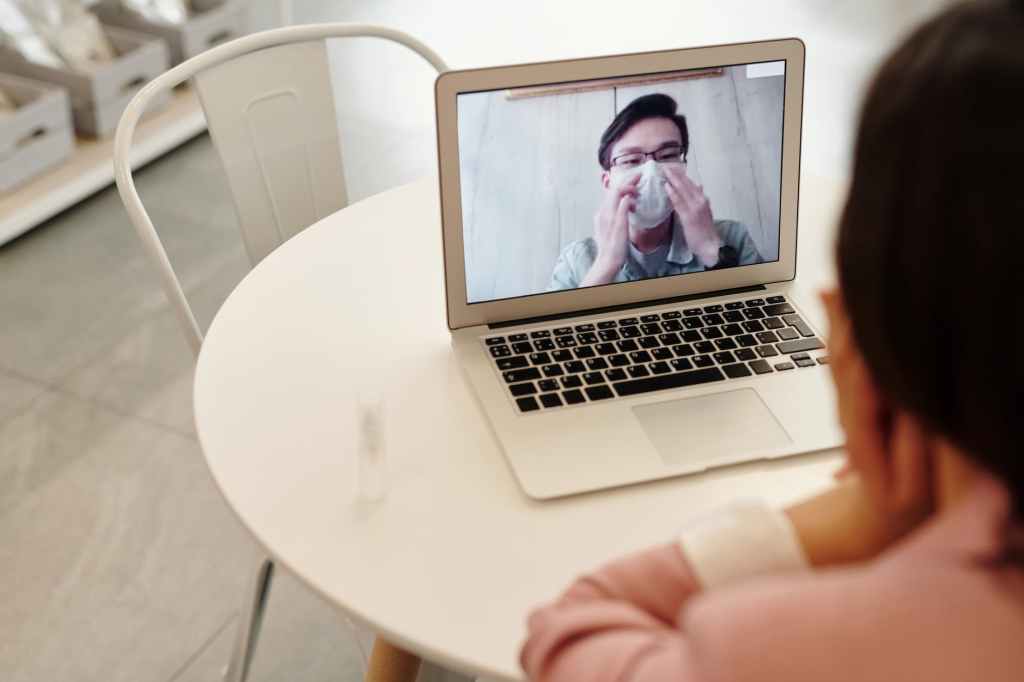
The ability to adjust hearing aids remotely is a plus for the hearing aid user and clinician. The follow up appointment can be conducted via the internet using a similar feature such as face time or skype. The client books and appointment with the clinician, they connect via the internet with audio and visual. The clinician can do adjustments to the user’s hearing aids in real time. The client does not have to be in the office but can be at home, at work, a restaurant, basically anywhere they can connect with the use of an app on their phone. Amazing and satisfying for both client and clinician.
But what if?
- The client has no clue how to connect to the internet or use the phone app
- There is poor internet service on both the clinician or the client’s side. Simple troubleshooting regarding Wi-Fi connection or internet service provider information and connection is important before booking appointments.
- Client does not have the up to date android version or IOS on their phone in order to download the app
- Client has older hearing aid technology not compatible with this new software feature. Not all clients will have hearing aids suitable for remote programming. This maybe an opportunity to discuss the benefits of newer technology.
- Clinician does not have the correct training – continuing education is needed and should be completed before venturing into virtual programming.
These are a few road blocks to bear in mind. They are not barriers. The success of telehealth is not impossible to achieve, training may be needed on both the client’s side and the clinician’s side. Also, certain clients are better candidates for this service than others because of technological deficiencies which maybe at first difficult to overcome. Therefore, explanations and making appointments less complicated but simple is the best approach. Complicated concerns need in house appointments and follow up care at the clinic is good practise. Clinicians need to remember that telehealth is only just a part of the full service regime provided by the clinic and not the only service available.
Along with the regular in house service such as hearing tests, face to face adjustments and follow up care additional service models are available to the client when needed.
Other Services:
- Curbside service within hours of operation – available for picking up supplies and emergency repairs or cleaning.
- Chat line – live persons should be available to talk with the public.
- Online how- to- videos and help videos will support the hearing aid end user
- Call centre or support call service – up to date with available access times and staffed with knowledgeable individuals preferably an Audiologist or a Hearing Instrument Practitioner
- Online presence/ website – up to date website with tips for clients to follow and contact information.
“Embracing Remote Programming” by Shari Eberts from her website http://www.livingwithhearingloss.com is a great resource written from the point of view of a person living with hearing loss.
Telehealth is here to stay. The current situation of COVID-19 has solidified the need to implement alternative methods of providing hearing healthcare to current and future patients. ( Remote Hearing Care a Primer by Dr.Younker, wwwhearinhealthmatters.org)
Delivering exceptional and professional service to those with hearing loss is the framework of a healthy hearing clinic. As a clinician, our duty to the clinic and the public is to remain proficient in our education and practical in its application. The service we provide is diverse, ongoing and it is essential for those in need, thereby making reliability and availability the hallmark of a good full service hearing clinic.
 jemfinds - Hello World 2.0